


 +90 256 612 88 88

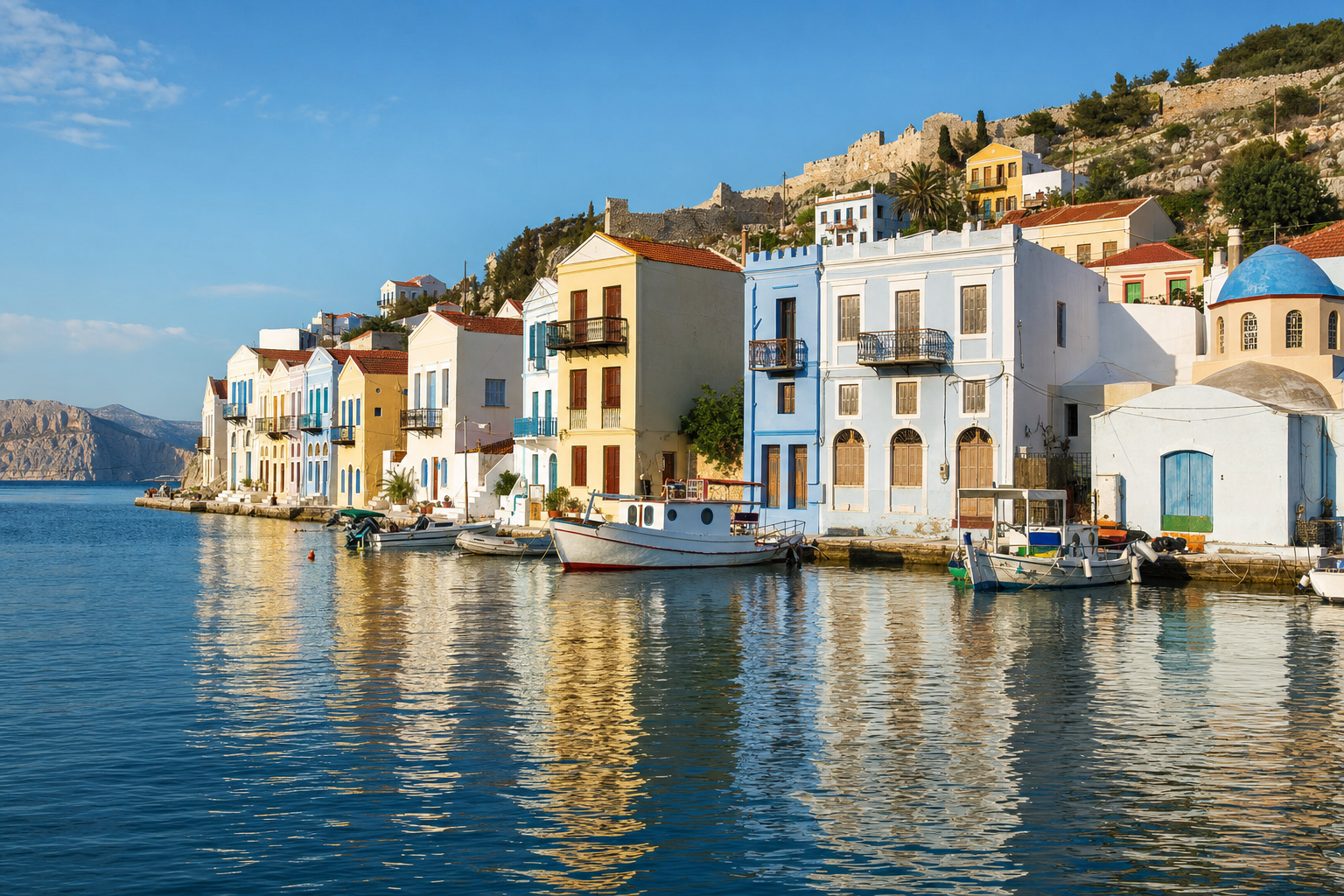
Kastellorizo Harbor Colorful Houses: Photo Guide
Kastellorizo harbor colorful houses are more than an attractive backdrop as your ferry approaches the island. Together, their narrow facades, ordered windows, painted wooden shutters, delicate iron balconies and tiled roofs form a coherent architectural landscape around the curve of the waterfront. Taking a good photograph here involves more than pressing the shutter. It helps to notice the rhythm of the buildings, the direction of the light and the way boats enter the composition.
Travellers arriving by ferry from Kas sail directly into Megisti Harbour, the main settlement of Kastellorizo, also widely known in Turkey as Meis. There is no need to hire a vehicle or travel to a distant neighbourhood to find the colourful houses. After passport formalities, a slow walk beside the water provides plenty of variety, from broad harbour views to close studies of doors, shutters and balconies.
The aim of this guide is to help you slow down and look, rather than hurry through a checklist. Consider each house in relation to the facade beside it. Notice how the same window changes between soft morning light and stronger afternoon sun. Before arriving, the essential introduction to Kastellorizo and its main settlement will help you understand the island's compact layout.
Why Are Kastellorizo Harbor Colorful Houses Special?
The features that shape the harbour skyline
Kastellorizo Harbour owes its distinctive appearance not to one monumental building, but to the collective outline created by many houses. The settlement extends horizontally beside the sea, while its narrow two and three storey facades emphasise height. This contrast creates a strong photographic structure. The shoreline carries the eye across the frame, while window axes, doors and building corners draw it upwards.
Many of the neoclassical houses have symmetrical, or nearly symmetrical, facades. Ground floor doors and openings often align with the windows above. Yet the buildings are not copies of a single design. Storey heights, pediments, balcony widths and colour choices vary, preventing the waterfront from appearing monotonous. The strongest wide compositions usually show both the repeated architectural pattern and these small differences.
How the painted facades interact with the sea
Pastel yellow, pink, pale blue, cream and terracotta become more pronounced beside the blue water. Some of this effect comes from light reflected off the harbour itself. As the sun rises, reflected light can gently illuminate balcony undersides and ground floor surfaces that might otherwise remain dark.
The water is not always a perfect mirror. Breezes, passing boats and harbour activity break reflections into moving fragments. Photographically, this is not a flaw. Broken strips of colour create a painterly lower layer instead of producing exact copies of the houses. When photographing near the edge, leave some visual space between the real facade and its reflected colour to create a calmer composition.
Reading the Architecture of Kastellorizo's Houses
The neoclassical facade
Kastellorizo architecture developed through the Dodecanese islands' historic trading connections and local building traditions. When studying the neoclassical houses, begin with the main axis. Is the entrance in the centre or set to one side? Are the upper windows evenly spaced? Does a cornice or pediment emphasise the middle of the facade? These questions reveal the building's underlying order before decorative details distract your attention.
The narrow frontage made efficient use of valuable space facing the harbour. Horizontal mouldings between storeys balance the impression of height. Some windows have pale borders, while elsewhere the contrast between plain render and dark shutters provides enough definition. You do not need to include an entire building to explain this arrangement. Framing a doorway with the two windows above it can clearly show the relationship between floors.
Shutters, balconies and door surrounds
Shutters add rhythm and depth as well as colour. Open shutters extend across the wall and strengthen a window's horizontal line. Closed shutters create concentrated blocks of colour. In morning light, their narrow shadows can become clearly defined on the plaster. Close views of hinges, layers of paint and weathered wood also say something about the everyday care required by houses beside the sea.
Balconies usually project only a short distance, providing views towards both the street and the water. Curved metal railings appear visually light against solid rendered walls. Plant pots, chairs and drying laundry remind you that these are lived-in homes. Do not automatically treat such elements as clutter, but avoid photographing into interiors through open doors or windows. Privacy should take priority over getting a particular shot.
Doorways may include stone surrounds, painted frames, steps and small windows above the entrance. A photograph taken straight on has a documentary quality, while a slight angle reveals the depth of the steps and wall. To combine your facade walk with other historic sites, use the guide to places to visit in Kastellorizo when planning your route.
Rooflines and storey proportions
Colour attracts attention first when the harbour is viewed from a distance, but the roofs complete its outline. Pitched and hipped tiled roofs look warmer and darker than the facades in direct sunlight. Their eaves mark where the walls end. Against the rocky hillside, irregular rooflines can lose definition. A lower viewpoint may separate the roofs against the sky more clearly.
Compare neighbouring houses of similar width when studying proportions. One may have a tall ground floor and shorter upper floor, while another uses nearly equal heights. Window size can also offer clues about interior use. Photographing from very close range with a wide angle lens exaggerates these relationships. Step back and use a more natural field of view if you want the result to resemble what the eye sees.
Following Colour and Facade Details
Harmonious and contrasting colour combinations
When examining the colourful houses in Meis, consider the wall, shutter and trim colours separately. Green shutters on cream render can feel calm and balanced, while blue joinery against a pink wall creates stronger contrast. White borders separate adjacent colours and make windows easier to read. Avoid increasing saturation too aggressively during editing, as exaggerated colour can destroy these subtle relationships.
A useful way to record colour pairings is to isolate two or three neighbouring facades. Include too many buildings and the colour story becomes confused. Begin with a wide view, then photograph the same row at a medium distance. On a phone, tapping the brightest wall and slightly reducing exposure can preserve texture in pale plaster.
Repeated patterns of windows and balconies
Three evenly spaced windows create a natural visual tempo. A balcony on the neighbouring building may interrupt that pattern and provide a focal point. Build the frame around the relationship between repetition and interruption, not simply around one attractive window. If a window or balcony is cut by the frame, make the decision look deliberate. Accidental cropping weakens the architectural order.
A vertical composition suits narrow houses and shows the relationship between their floors. A horizontal frame is better for the rhythm created by several facades and the curve of the waterfront. Take both from the same position. When reviewing your images, judge not only sharpness but also which frame communicates the architectural idea most clearly.
Signs of ageing, maintenance and renewal
The character of Kastellorizo's neoclassical houses is not visible only on perfectly restored surfaces. Salt air, intense sunlight and wind leave faded paint, oxidation on metal and small cracks in render. These are records of a building's life by the sea. Placing a newly painted shutter beside a faded one can produce a revealing comparison of maintenance cycles.
That does not mean decay should be romanticised. Kastellorizo is a living settlement, and renovation allows these buildings to remain in use. Fresh paint beside an old stone step can show past and present sharing one facade. Add the date to your photographic notes, since colours and states of repair may have changed by your next visit.
Planning a Kastellorizo Harbor Photo Walk
Finding broad harbour views
After passport control, spend a few minutes observing the surroundings before taking dozens of photographs. The ferry landing area may be busy with passengers, signs and operational activity. As you continue around the waterfront, broader views open towards the opposite side. Positions that include the curving shoreline show the colourful houses as a complete settlement rather than a flat row.
Foreground choice matters in a wide view. A boat's bow, a mooring rope or the harbour stones can add depth. If that foreground blocks too many houses, move a few steps sideways. Keeping the horizon level is particularly important when water occupies much of the image. If you are adding other sights to the same day, review the highlights of Kastellorizo and set realistic priorities.
Close compositions for facade details
A close composition does not necessarily require standing next to the wall. A moderate telephoto view from across the harbour can reduce perspective distortion. If your phone offers true optical zoom, use it rather than excessive digital enlargement. A clean, balanced original that can be cropped later will usually retain more detail.
Choose a small theme for a detail series, such as blue shutters, iron balcony railings, fanlights or house numbers. Photographing the same feature on several homes creates a more meaningful visual narrative than one isolated image. Keep the framing consistent enough to invite comparison, but flexible enough to avoid repetition.
Using reflections and boats as layers
Boats are difficult to exclude from harbour photography, and there is usually no reason to remove them. Fishing boats and excursion vessels belong to the relationship between the houses and the sea. Match the colour of a hull to a shutter in the background, or use a white boat as a visual pause against dark water. Shift your position in small steps so that masts do not divide important facade details at random.
Lowering the camera towards the water increases the share of reflection in the frame. Remain within safe public areas and watch for wet stones. Wait for brief moments when the water settles, or use burst mode to record different wake patterns. The best image may not be a perfect reflection, but the instant when pink and yellow houses dissolve into abstract strips of colour.
Photographing Kastellorizo Harbor Colorful Houses in Different Light
Colour and shadow in the morning
The harbour may be quieter in the morning, before the day becomes hot. The angle of light depends on the side of the harbour and the season, so there is no universally correct hour. As soon as you arrive, check which surfaces are illuminated. Side lighting creates narrow shadows from shutters and balcony railings, giving flat facades greater depth.
When pale walls are much brighter than shaded windows, expose for the render. It is easier to lift some detail from a dark area later than recover plaster that has become featureless white. Photographing broad harbour scenes first and turning to details as the sun rises can be an efficient sequence.
Stronger afternoon contrast
Afternoon sun can make colours brighter and shadows harder on some facades. This suits graphic compositions. The dark shadow of an open shutter or the repeated lines of a railing may become particularly clear, although the same light can be less flattering for portraits and gentle colour transitions.
Keeping the sun directly behind you may eliminate most shadows and flatten the architecture. A slightly diagonal position retains more depth. If flare appears, shade the lens with your hand while checking that your fingers remain outside the frame. A polarising filter may reduce glare from the water, but use it carefully because it can create uneven darkness in a wide expanse of sky.
Detail photography under cloud
Cloudy weather is not bad news for a Kastellorizo harbour photo guide. Diffused light reduces the difference between bright plaster and dark shutters, making painted textures easier to record. Door surrounds, areas below the eaves and narrow passages can appear more balanced. Colours may be quieter than in full sun, but an appropriate white balance will preserve their natural character.
If the sky is completely white, give it less room in the frame. Place the roofline close to the upper edge or concentrate on details. Stone and wood become darker after rain, while reflections grow stronger. Remember that the ground may be slippery, and never block a passage while composing an image.
An early autumn shooting plan
Around 24 September 2026, the early autumn sun follows a lower path than at midsummer and daylight is beginning to shorten. Side lighting may therefore remain noticeable for longer during the day. Weather, wind and cloud cover still change daily, so do not build the whole plan around one predicted lighting condition.
Carry a light outer layer, drinking water, sun protection and enough battery power. Wind over the water can feel cool while sheltered parts of the quay remain warm. Check the forecast shortly before your ferry day. If time allows, record your general views on the first circuit, then revisit selected facades after the light has changed.
Practical Notes for Better Architectural Photographs
Keeping vertical lines under control
When a phone or camera is tilted upwards, the sides of a building appear to converge. This can be used deliberately, but for a documentary facade photograph, keep the device as level as possible. Moving farther away reduces the amount of tilt needed to include upper floors. Activate the screen grid and compare its lines with doors and building corners.
Editing tools can correct perspective later, but they crop the edges, so leave some space around the subject. Excessive correction may make a house appear unnaturally wide. Do not sacrifice the harbour's lived-in character for perfect geometry. The purpose is to communicate the building's proportions convincingly, not display a technical trick.
Working with crowds and moving boats
The quay becomes busier when day visitors arrive and boats are moving. Instead of waiting for a completely empty harbour, use people to indicate scale. Burst mode can help capture a passer-by in a suitable position against a facade. If a recognisable person will be the close, central subject, asking permission is the respectful approach.
When masts and ropes form a confusing network, search for a simpler background. The solution may be walking a few metres along the quay rather than crouching in the same place. Kastellorizo works especially well for exploring a Greek island without a car, since the harbour architecture is accessible on foot. A phone, spare battery and small lens cloth may be all you need.
Respecting private spaces
Most colourful facades belong to homes or businesses, not open-air exhibits. Do not climb private steps, photograph through open doors, move plant pots or wait outside a window for long periods. Work with details visible from the public waterfront. If you need a closer position on private property, ask the owner first.
A tripod can obstruct pedestrians in narrow passages. In daylight, most phones and cameras can produce good handheld results. Working quietly, avoiding loud direction and not making diners at restaurant tables the principal subject will create a more respectful and natural photo walk.
Frequently Asked Questions
Where can I see the colourful houses in Kastellorizo Harbour?
The colourful neoclassical houses extend along the waterfront of the main harbour where ferries arrive. After passport formalities, you can reach a range of viewpoints on foot. The Kastellorizo island guide can help you place the harbour within a wider day plan.
What is the best time to photograph the houses?
There is no single ideal hour because the angle of the sun changes with the season and the facade you are photographing. Mornings may bring a quieter harbour and softer shadows, while afternoons can create stronger contrast. Check the light direction as soon as you leave the ferry and begin with the illuminated side.
Can I take good architectural photographs with a phone?
Yes. Activate the grid, keep the phone level, reduce exposure on bright walls and limit digital zoom. Clean the lens before starting, since fingerprints and sea spray quickly reduce contrast and clarity.
Can the harbour area be explored on foot?
Yes. The principal waterfront is walkable, and most of the colourful houses can be viewed from the quay. Choose comfortable shoes because some surfaces may be uneven or slippery. If you climb into the steeper back streets, allow extra time to return.
How long should I allow for a photo walk on a day trip?
About one hour may be enough for broad views and several facade photographs. For architecture, reflections and changing light, a flexible period of two to three hours is more comfortable. Do not include passport formalities, lunch or the required return check-in time within that estimate.
Plan Your Kastellorizo Photo Trip from Kas
Building your walk around the ferry
For a day trip, confirm the outward and return ferry arrangements before dividing the day into photography sessions. Timetables should never be assumed to remain fixed. Check the current Kas to Kastellorizo ferry departures for your chosen date, allowing for possible weather or operational changes.
A practical approach is to devote the first walk to broad harbour views and the second to details. Pause in the shade between them and review your images. This gives you time to repeat a missed facade or correct an exposure before returning. If you plan an additional excursion such as the Blue Cave, reduce your harbour photography time realistically.
Tickets, passports and entry preparation
The crossing from Kas to Kastellorizo is short, but it is an international journey. Passport, visa and any special entry arrangement depend on your nationality, personal circumstances and current official rules. Do not make assumptions based on previous trips or another traveller's experience. Check current requirements before travelling. The information on gate visa conditions is a useful starting point where that arrangement may apply.
Booking in advance makes the plan more dependable, particularly if you are targeting a particular kind of light. Arrive according to the operator's stated check-in requirement. Organise camera equipment so that it can be inspected easily, protect spare batteries and keep accessible copies of your ticket and necessary documents on your phone.
Leaving enough time before the return journey
Do not risk the return crossing for one final photograph. Be back near the port before the stated meeting or check-in time. Waiting for a cafe bill, returning from an uphill lane or dealing with a memory card can take longer than expected. It is safer to spend the final half hour making supplementary images close to the harbour than beginning a new route.
The most productive Kastellorizo photo walk comes not from covering the greatest distance, but from looking at the same facade again from another distance and in different light.
Once you have checked your travel date, documents and current timetable, keep the shot list concise: one wide harbour view, one sequence of facades, one doorway detail, one reflection and one image showing human scale. To confirm your journey from Turkey, review the available Kas to Kastellorizo ferry tickets with Meander Feribot and book the sailing that suits your plan.