


 +90 256 612 88 88

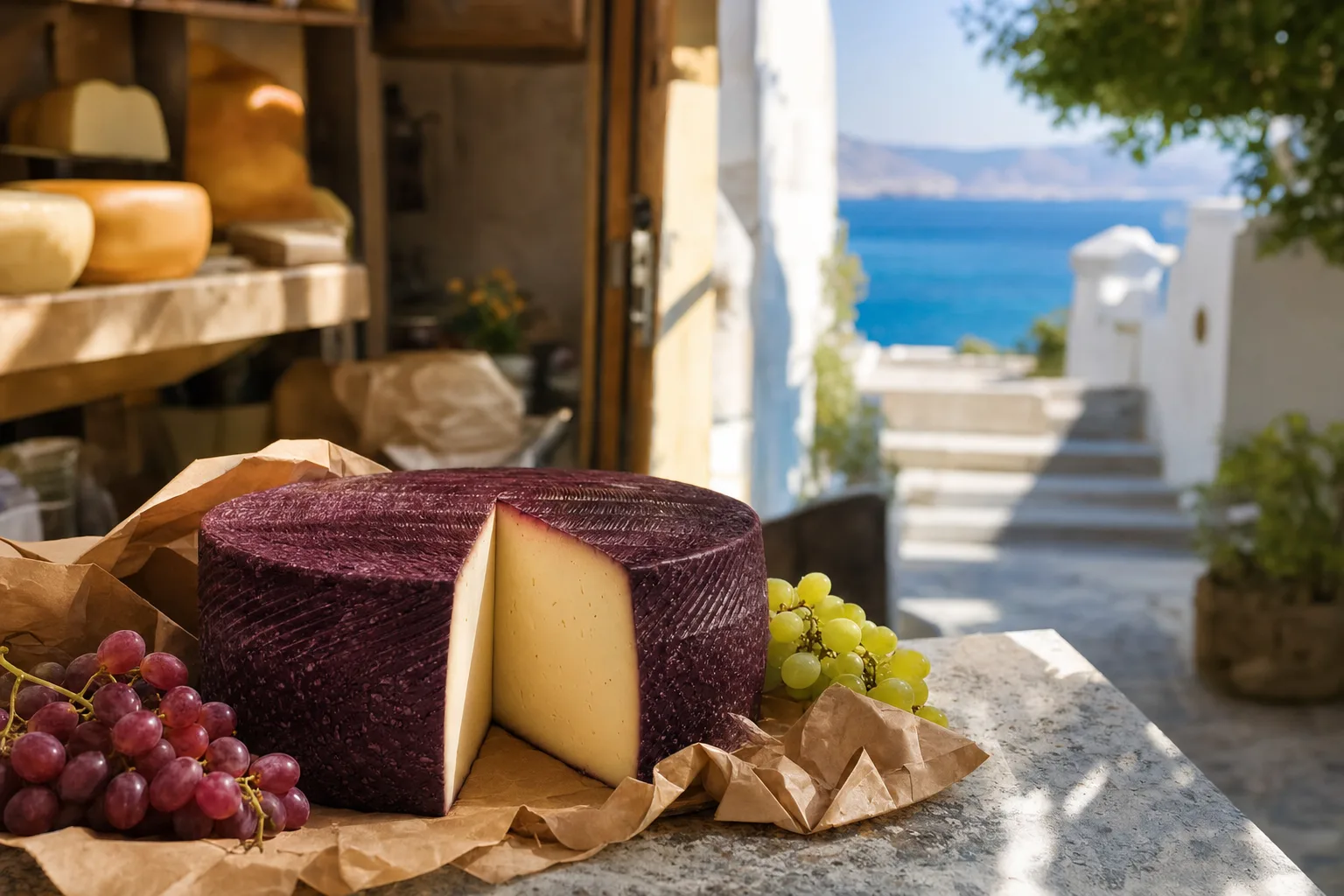
Posa Cheese in Kos: Questions to Ask Before Buying
When shopping for posa cheese in Kos, a dark rind and a strong wine aroma are not enough to identify a good product. Ask where the cheese was made, which milk was used, whether it was genuinely matured in grape pomace, and how it was stored before reaching the counter. If you are returning to Turkey by ferry on the same day, packaging and temperature control matter just as much as flavour.
Products that look similar may have been made in quite different ways. Some cheeses are rested in genuine grape skins, seeds and pulp left after winemaking. Others are coated with wine, a pomace paste or a flavoured mixture. None of these methods is automatically inferior, but you should know what you are buying. Consider the label, the seller's explanation and the condition of the refrigerated display together.
For broader trip planning, start with our introduction to Kos Island. If you plan to shop shortly before leaving, allow time to return to the port, collect your luggage and complete departure procedures. Buying cheese in the morning and carrying it around in a warm bag for several hours can needlessly spoil an otherwise excellent product.
What is posa cheese in Kos, and why is it different?
Posa cheese is made by bringing a finished or partly matured cheese into contact with grape pomace left from winemaking. The pomace usually contains grape skins, seeds and a small amount of fruit pulp. Greek labels may use local terms such as tyri tis posas, but names and spellings vary. Rather than relying on the product name alone, ask the seller to explain the method.
The process does more than add a wine aroma. Moisture in the pomace, grape variety, fermentation stage, contact time and the cheese's initial maturity all affect the result. Two products sold under the same general name can taste completely different. One may be soft and fruity, while another is firm, sharp and tannic. There is therefore no single flavour profile that answers the question, what is posa cheese?
What does ageing in wine lees or grape pomace mean?
In genuine pomace maturation, the cheese is surrounded by, or placed in direct contact with, solid grape material left after wine production. This may form part of the main maturation period or be a shorter finishing stage. Ask whether the cheese was rested inside actual pomace or merely coated with a pomace mixture. The answer will tell you far more than the colour of the rind.
Fresh pomace used directly after winemaking can produce a different result from dried or processed material. The stage of fermentation may also influence acidity and aroma. If the seller does not know the technical details, ask to see the producer's label, leaflet or information printed on the sealed package.
What should you expect from the aroma, texture and rind?
The rind may be purple, burgundy, brown or dark red. Its colour depends on the grape, contact time and moisture at the cheese's surface. A very dark rind is not proof of long maturation. Ask whether colouring, wax or another surface treatment has been used.
Typical aromas may suggest fermented grapes, a wine cellar, dried fruit, yeast or mild vinegar. By contrast, burning ammonia, obvious putrefaction or the smell of an unclean damp cloth should make you cautious. Depending on the style, the interior may be firm, crumbly or slightly springy. An excessively wet, slippery layer between the rind and centre can indicate poor storage, particularly in a pre-cut piece.
What should you ask about the cheese's origin?
Not every rustic-looking cheese sold on Kos was made on the island. Cheese may arrive from another part of Greece and then be finished in local pomace, or it may be supplied ready for sale. Clarify whether the word local refers to the milk, the place of production, the maturation stage or simply the shop where it is sold.
Where was the cheese made, and by whom?
Begin with a direct question: was this cheese made on Kos? Then ask for the producer's name and production location. If the seller can identify a farm, dairy or packer, compare those details with the label. Remember that the producer and the business cutting and packaging the cheese may be different.
If village visits are part of your plans, our guide to places to visit in Kos can help you coordinate sightseeing and shopping. A product sold in a village shop was not necessarily made in that village, however. A named producer and traceable address are more reliable indicators.
Which milk was used?
Cow's, sheep's and goat's milk have different fat structures and flavour characteristics, and blended milk may also be used. If it is a blend, check whether the proportions appear on the label. Travellers with an allergy, intolerance or dietary preference should not rely solely on spoken information. Read the ingredients and allergen declaration on the package.
Sheep's milk can give a fuller, richer texture. Goat's milk may produce a more pronounced, occasionally grassy or sharp profile. In cow's milk versions, the pomace character may seem more obvious. These are tendencies, not firm rules. Season, animal feed, starter cultures, salting and ageing time can all change the finished flavour.
What are the production and maturation dates?
A cut piece on a deli counter may not display its production date. Ask when the cheese was made, when it came into contact with pomace and when it was released for sale. A simple question such as how many months old is it may be easier for the seller to answer. Do not confuse the packaging date with the production date.
Look for a use-by or best-before date where the producer provides one. If you are considering an undated cut piece, ask when the shop opened or cut it. Where no reliable answer is available, buying a small quantity, avoiding a long journey and eating it promptly is the more cautious approach.
How should you ask about pomace and maturation?
The phrase wine lees aged cheese does not provide a complete technical description. The grape variety, freshness of the pomace, type of contact and duration all matter. Do not judge the method by rind colour alone. A good seller may not know every technical detail from memory, but should normally be able to show you the producer's information or label.
Which grapes supplied the pomace?
Asking about the grape is not merely a question for wine enthusiasts. Dark-skinned grapes usually leave a stronger colour on the surface, while white grape pomace may produce a paler rind and a different aromatic profile. Ask whether a single variety or a blend was used, and whether the grapes came from Kos.
If the seller does not know the variety, try asking whether the pomace was from red or white grapes, which winery supplied it and whether the same method is followed every season. Small batches may vary from one harvest to another. This is not necessarily a fault, but it can affect what you should expect.
How long was the cheese left in the pomace?
A few days of surface contact is not the same as several weeks of maturation. Longer contact does not automatically mean better quality. Too much moisture, unbalanced salt or uncontrolled ageing can overwhelm the cheese itself. Useful questions include how many days or weeks it remained in the pomace and whether the process took place under refrigeration.
The cheese may have completed its whole maturation in pomace, or it may have been aged separately before a final finishing stage. The second technique tends to contribute surface colour and aroma. The first may affect the texture and scent more deeply. Your preferred method depends on how assertive you want the pomace character to be.
Is the rind natural or coated?
A natural pomace rind may show grape fragments, seed marks and irregular colour transitions. A smooth, glossy surface could suggest wax or another protective coating. Appearance alone is not conclusive, so ask directly whether the rind has any inedible treatment.
Check the packaging for preservatives, colourings and surface treatments. If the Greek text is difficult to understand, ask the seller to point out the ingredients section. If you intend to taste the rind, the question is the rind edible should be answered before you pay.
How should you inspect posa cheese before buying?
A shop may not be able to open sealed packaging for inspection. You can still check whether the pack is intact, the label is legible, the refrigerator feels properly chilled and the cheese is sitting in an unusual amount of liquid. With counter-cut cheese, the exposed face provides more clues.
Check the rind, colour and moisture
Slightly uneven colouring can be natural. If you notice unusual pink, orange or furry growth, ask whether it is an intentional part of the producer's rind culture. A controlled surface flora and uncontrolled mould are not the same thing.
A few droplets inside a vacuum pack do not always indicate spoilage. Excess liquid, a swollen pack, a loose vacuum or leakage should not be accepted. Dry cracks may mean a cut surface has been exposed for too long. An excessively shiny and slippery surface can suggest temperature fluctuations.
Assess the aroma and texture
If tasting is offered, smell the cheese for a few seconds first. Try to identify the milk beneath the wine and fermented grape aromas. If you detect only harsh alcohol, ask whether it comes from maturation or wine applied later to the surface. A clean, distinct and layered aroma generally suggests a better-balanced product.
If appropriate, gently press a small piece and note whether it is chalky, creamy, rubbery or crumbly. Any of these textures may be normal for a particular cheese style. The important point is that the rind and interior should not show unexplained, contrasting signs of deterioration.
Read the label and consider the cold chain
Look for the product name, milk type, allergens, producer or packer, net weight, dates and storage instructions. Ask the seller to explain the main lines if necessary. Cheese requiring refrigeration should not be displayed in direct sunlight or on an unrefrigerated shelf by the entrance.
Reviewing advice on getting to and from Kos port can make the return journey easier to time. Passport, visa and entry procedures can change, so check the current requirements before travelling.
What should you notice during a tasting?
The flavour of posa cheese should not be assessed only by the strength of its wine note. Consider the milk, salt, acidity, rind aroma and finish together. A powerful pomace smell is not proof of quality. The grape character should support the underlying cheese rather than serve as the only feature masking its faults.
Aroma intensity and salt balance
With the first bite, notice whether salt overwhelms everything else. Then consider how long notes of grape skin, dried fruit, yeast or wine remain. A burning alcoholic sensation in the throat may indicate a dominant surface application. Mild astringency can naturally come from compounds in the grape skins and seeds.
Balance depends partly on personal taste. Those who enjoy assertive cheese may prefer a firm, longer-aged example. For something gentler, ask for a younger cheese with shorter pomace contact. Telling the seller your preferred intensity is more useful than simply asking which one is best.
Taste in small portions
Start with a small piece without the rind. If the seller confirms that the rind is edible, try a second piece from close to the edge. This comparison shows how far the pomace influence has penetrated. When comparing two cheeses, drink water and use plain bread to clear your palate.
Cheese served immediately from a very cold refrigerator may have muted aromas. It is also sensible to ask how long a tasting sample has been sitting out. A piece left on the counter for hours may not represent the texture of the sealed product you will take away.
Pairing posa cheese with local foods
Try small portions with plain bread, lightly salted crackers, figs, grapes or a modest amount of mild honey. Very sweet preserves can cover the pomace character. If olives and cured meats share the plate, keep an eye on the overall salt level.
Do not turn the tasting into a rushed purchase at the end of a tiring day. Use our suggested Kos itineraries and travel tips to reserve a separate shopping window near your return to the port. If you are exploring on two wheels, read our advice on bike rental in Kos, but avoid carrying refrigerated cheese in a bicycle basket for an extended period.
How should posa cheese be packed, stored and transported?
How to store posa cheese depends on its moisture, age and packaging. The temperature and consumption period printed on the label take priority. Tell the seller how long your journey home will take and ask for suitable packaging. General cheese advice should never override instructions for that specific product.
When is vacuum packing useful?
Vacuum packing reduces a cut cheese's contact with air and external contaminants. It also limits odour leakage and makes the piece easier to carry in ferry luggage. For a longer return journey, it is often practical. Ideally, have it packed in front of you and ask for a label showing the date and weight.
Vacuum packing may not suit every very soft or actively maturing cheese. Ask whether it is appropriate for the product, whether it could damage the rind and whether the package should be opened after you arrive home. If a pack swells, leaks or develops a sharply abnormal smell, seek informed advice before tasting it.
How can you protect the cold chain on ferry day?
Buy the cheese as close to departure as reasonably possible. Use a small insulated bag with a frozen gel pack. Place a clean cloth or thin piece of card between the gel pack and cheese so that the surface is not accidentally frozen. Keep the bag away from direct sunlight, hot paving and the boot of a parked vehicle.
Check whether your cooling materials comply with the operator's security and carriage rules. Allow extra cold capacity in case the ferry is delayed. Reviewing the latest Bodrum to Kos ferry departure information can help you avoid buying the cheese unnecessarily early.
Where should you verify current customs rules?
Rules governing animal products in passengers' luggage may vary according to product, quantity, origin and current health measures. A seller saying that everyone takes it home is not official permission. If returning to Turkey, consult the current passenger regulations published by the relevant Turkish customs and agricultural authorities.
Our ferry travel tips are a useful starting point for port procedures and document checks. Official notices in force on your travel date must take priority. It is easier not to buy a restricted product than to open the package or surrender it at the port.
Frequently Asked Questions
Is posa cheese unique to Kos?
No. Maturing cheese with grape pomace is not exclusive to Kos, and related methods appear in other wine-producing regions. To decide whether a particular cheese is genuinely local, ask separately where the milk came from, where the cheese was made, where the pomace originated and where maturation took place.
Can you eat the pomace-covered rind?
It depends on the product. The rind may be natural and edible, or it may contain wax, a protective coating or another treatment not intended for consumption. Read the label and do not eat it without clear confirmation from the seller or producer.
Does vacuum packing affect the flavour?
Because vacuum packing reduces air contact, it may temporarily alter the aroma and surface texture. Some cheeses express their aromas more clearly after a short rest once opened. Follow the producer's serving and storage instructions.
How long can posa cheese be stored?
There is no single safe period. Moisture, milk type, maturity, whether the cheese has been cut, and its packaging all affect storage life. Follow the date and temperature instructions on the label, and ask how quickly it should be eaten after opening.
What are the rules for bringing cheese into Turkey?
Rules for animal products in passenger luggage can change. The existence of a quantity allowance does not mean every cheese is automatically accepted. Immediately before travelling, verify the latest guidance from Turkish customs and agricultural authorities. Check current passport and visa requirements in the same way.
Final checklist for buying posa cheese in Kos
Before entering the shop, decide how much cheese you can realistically eat and how long your return journey will take. A large piece may appear better value, but not if storage time is short or transport conditions are poor. For most travellers, a small, properly packed and traceable portion is the more sensible purchase.
Short questions to ask the seller
- Where was the cheese made, and who produced it?
- Was it made from cow's, sheep's, goat's or blended milk?
- Is the grape pomace from Kos, and which grape variety was used?
- How long was the cheese kept in genuine pomace?
- Is the rind natural and edible, and does it have a coating?
- What are the production, packaging and best-before dates?
- At what temperature should it be stored, and how soon should it be eaten after opening?
- Can it be vacuum packed and kept cold for the ferry journey?
It is unrealistic to expect every answer to include perfect technical detail. However, a seller who cannot identify the producer, milk or storage conditions is giving you useful information of another kind. When buying posa cheese, traceability and correct refrigeration matter more than an attractively coloured rind.
Plan for purchase and return day
- Confirm your ferry time and when you need to be at the port.
- Schedule the purchase during your final hours on the island where possible.
- Ask about the milk, origin and pomace technique before tasting.
- Check the packaging, label, dates and refrigerated display.
- Place the vacuum-packed cheese in an insulated bag.
- Verify current rules for animal products through official customs sources.
- Refrigerate the cheese promptly when you reach your accommodation or home.
As of 6 November 2026, the weather may be cooler than in midsummer, but that does not remove the need for a cold chain. Port waiting areas, enclosed vehicles and bags left in sunlight can warm up quickly. If you also want to visit the ancient centre, schedule your time exploring the Casa Romana mosaics separately from your final food-shopping window.
Once your ticket is arranged, plan your tasting and shopping around the return departure. Check current sailings, fares and reservation options on the Bodrum to Kos ferry ticket page, then book your crossing with Meander Feribot.