


 +90 256 612 88 88

Rhodes Melekouni Sweet: Wedding Tradition and Tasting
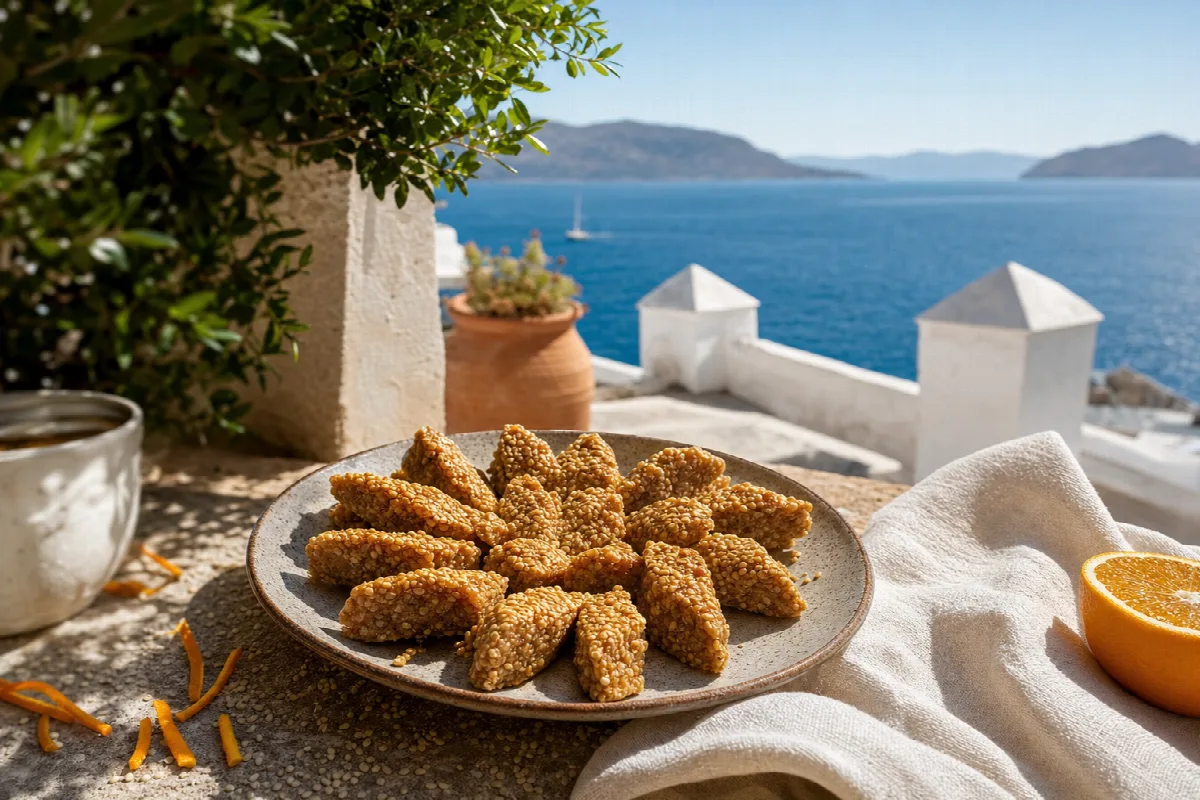
Rhodes melekouni sweet is much more than a convenient snack made from sesame and honey. Served at island weddings as a symbol of abundance, unity and hopes for a sweet life together, melekouni is an edible tradition rooted in the social memory of Rhodes. It is usually cut into diamond shaped pieces and scented with citrus peel and spices. A well made piece should not be hard enough to hurt your teeth. Thanks to the honey, it remains slightly flexible and pleasantly chewy.
When looking for melekouni in Rhodes, a picture of sesame seeds on the packet is not enough to establish authenticity or quality. Consider the honey, the degree to which the sesame has been toasted, the balance of spices, the shape of the sweet and where it was produced. Melekouni may resemble pasteli sold elsewhere in Greece, but small differences in appearance reflect much more significant differences in cultural identity.
If you enjoy understanding a destination through its food, begin with some background about Rhodes Island, then fit your tasting stops between historical sights. Melekouni will become more than a packet placed in your suitcase. It will be a flavour connected to the place, people and traditions you encountered during your visit.
What Is Rhodes Melekouni Sweet and Why Is It Local?
Melekouni is a traditional Rhodian product made primarily with sesame, honey, citrus peel and aromatic spices. Recipes vary slightly between families, villages and producers. Some versions may also include nuts such as almonds. Its defining structure, however, is a generous quantity of sesame bound with honey and lifted by a spiced citrus fragrance.
Its Rhodian identity does not come from the recipe alone. Preparing the sweet collectively before a wedding, cutting it into its characteristic shape and sharing it with guests as a gesture of goodwill are all part of its identity. Food becomes a carrier of local culture when it represents more than a list of ingredients. The Rhodes melekouni tradition is a particularly clear example.
The name and its historical traces
You may encounter several explanations for the origin of the word melekouni. The name is generally associated with Greek words connected to honey and with the sweet's distinctly honeyed character. Rather than presenting one uncertain linguistic interpretation as fact, it is more useful to note that honey appears central even in discussions of the name.
The combination of honey and sesame has a long history in the eastern Mediterranean. Foods using these ingredients appear in ancient texts and in later culinary traditions. It would nevertheless be too ambitious to link the modern Rhodian wedding sweet directly to one specific ancient recipe. Melekouni's real historical strength lies in preserving old Mediterranean ingredients within a social ritual particular to Rhodes.
What does its geographical indication mean?
Melekouni has protected geographical indication status at European Union level. This protection makes the product's relationship with Rhodes, its traditional production features and its defined character more visible. It also clarifies that not every bar containing sesame and honey can automatically be sold as authentic melekouni.
The melekouni geographical indication should not be viewed as a marketing label alone. Its purpose is to protect the relationship between the product and its place of origin, together with knowledge passed from one generation to the next. When buying a packaged product, look for the relevant wording or protection symbol. This can help you choose an example genuinely associated with Rhodes. Remember that a logo cannot guarantee personal taste or perfect quality by itself. Freshness and appropriate storage still matter.
The Rhodes Melekouni Tradition at Weddings
To understand melekouni, it helps to take it off the shop shelf and place it back within wedding preparations. In traditional accounts, relatives and close friends gather before the wedding to make the sweet together. Their shared work reflects the idea that an approaching marriage joins not only two people, but also families and the wider community.
The preparation and sharing ritual
Sorting and toasting sesame, preparing the honey mixture, spreading the warm mass and cutting it into portions all require care. When a large quantity is needed, dividing the work naturally turns preparation into a communal activity. Traditionally, pieces of melekouni may be presented with the wedding invitation or distributed to guests during the celebration.
Most pieces are cut into a diamond shape. This is one of the visual details that distinguishes melekouni from ordinary rectangular sesame bars. Size and thickness vary from one producer to another, but the shape has become closely associated with its ceremonial presentation. On opening a packet, expect a neatly cut piece with clearly visible sesame seeds and a lightly glossy surface created by the honey.
The symbolic meaning of honey and sesame
Honey is associated with sweetness in married life and with good wishes for the future. The many small sesame seeds evoke abundance, fertility and prosperity. Similar symbols appear in different forms across Mediterranean communities, but in Rhodes they are brought together in a specific wedding offering.
The sweet's sticky, closely bound texture also reinforces its association with togetherness. This should not be treated as a fixed or official dictionary of symbols. Folk traditions can be explained differently by individual families and may change over time. The consistent theme is that melekouni shares positive wishes for a new life with the people attending the celebration.
Melekouni at celebrations beyond weddings
Melekouni is no longer limited to weddings. It may be offered at baptisms, engagements, local festivals and family celebrations. As visitor interest has grown, it has also become widely available in bakeries, traditional food shops and souvenir businesses, either as individually wrapped portions or in boxes.
Commercial availability does not necessarily weaken the tradition. It can help small producers maintain the recipe and introduce it to a wider audience. A freshly prepared wedding melekouni, however, may not have the same texture as a packaged version designed for a longer shelf life. Set your expectations according to the product's intended purpose.
Rhodes Melekouni Sweet Ingredients and Texture
The list of melekouni ingredients looks simple, but proportions and preparation make a substantial difference. Sesame forms the main body. Honey provides sweetness and holds the seeds together. Orange or lemon peel adds freshness to an otherwise rich, oily mixture. Cinnamon, coriander seed or other aromatics particular to the producer's recipe may appear in the background.
Balancing sesame, honey, citrus and spices
The sesame should be clean, fresh and evenly toasted. Excessive toasting produces bitter or burnt notes. Too little toasting can leave the expected nutty aroma underdeveloped. Sesame should be recognisable in the first bite, while the honey should round out its flavour rather than conceal it.
The type of honey varies between products. Aromatic honey reflecting the plants of Rhodes and its surroundings can create a more distinctive result. If the variety is not clearly stated on the label, do not treat a casual sales claim as verified information. It is reasonable to ask where the honey comes from and whether the recipe contains added sugar or glucose syrup.
Citrus peel should provide a fresh top note. If overused, it can make the sweet taste perfumed. Spices require the same restraint. Cinnamon contributes warmth, while coriander seed, when included, can add a lightly citrusy and herbaceous layer.
Softness, crunch and aroma
Melekouni does not need to snap like hard confectionery. A good example offers some resistance when bitten but is not excessively hard against the teeth. The sesame seeds provide small points of crunch, while the honey mixture gives the whole piece a chewy structure.
Temperature affects that structure. In hot weather, the honey may soften and stick to its wrapper. In cold conditions, the sweet can feel considerably firmer. Leaving a piece at room temperature for a short time before tasting makes it easier to assess its true texture. If the sesame oil has deteriorated, you may notice a heavy, stale smell that can sometimes resemble paint. Do not eat a product showing those signs.
Rhodes Melekouni Sweet Versus Pasteli
The difference between melekouni and pasteli cannot be reduced to a single rule, because pasteli is made according to many recipes across Greece. Both products may be based on sesame and honey. Melekouni nevertheless has a distinct identity through its connection to Rhodes, citrus and spice profile, traditional shape and role in wedding customs.
Ingredient ratios and preparation
Pasteli can be hard and brittle in one producer's version and noticeably softer in another. Commercial varieties may contain sugar or alternative binding ingredients. In melekouni, the honey character is expected to remain clear and balanced with the sesame. Citrus peel and spices take it further away from a plain sesame bar.
Both products involve heating honey or another sweet mixture, combining it with sesame, spreading the mass and cutting it. The differences emerge in the details. Temperature, the ratio of honey to sesame, thickness and resting time all influence the final texture. For this reason, small variations between two handmade pieces of melekouni are entirely normal.
Shape, texture and serving tradition
Pasteli is generally sold as a rectangular bar or thin sheet. Melekouni's traditional diamond cut is more distinctive. Pasteli is widely understood as an everyday snack, while melekouni has a much stronger association with wedding invitations and celebratory hospitality.
In short, every melekouni belongs broadly to the sesame and honey family, but not every sesame pasteli is melekouni. Rhodian origin and traditional characteristics are decisive. If a seller describes an ordinary sesame bar as melekouni, check its ingredients, place of production and geographical indication information.
What to Look for When Tasting Melekouni
You do not need a large serving for a useful melekouni tasting. Smell a small piece first, then chew it slowly. Look for sesame in the opening flavour, honey through the middle and citrus with spices in the finish. Unsweetened coffee or plain tea makes a good accompaniment and helps refresh the palate.
Freshness and sesame aroma
Fresh melekouni should have a clear toasted, nutty sesame fragrance. Its surface should not feel dry and stone hard, nor should it release an excessive amount of oil. A little stickiness is normal in a honey based product. Do not eat it if you notice heavy moisture inside the packet, unusual marks or an aroma suggesting spoilage.
Try the product at room temperature. A piece taken directly from the refrigerator may seem harder than it really is. A packet left in a very hot vehicle may soften and lose its shape. Always consider storage conditions when assessing texture.
Honey balance and spice character
Well balanced melekouni should not leave only a flat sugary taste. Floral or herbal qualities in the honey should remain perceptible alongside the sesame. If the sweetness catches in your throat or completely covers the other flavours, the balance may be poor.
Spicing acts as the recipe's signature, but cinnamon should not dominate everything else. Citrus peel may leave a clean, lively note at the end of the bite. Buying small packets from several producers is one of the best ways to compare recipe styles side by side.
Reading the label on packaged melekouni
The label should state the product name, producer, place of production, ingredients, allergens, net quantity, storage guidance and best before date. Ingredients are normally listed in descending order by weight, giving you an indication of the recipe's composition. Check for sugar, syrup, nuts or additional flavourings alongside the sesame and honey.
- Origin: Confirm that the product was made in Rhodes.
- Ingredients: Check whether sweeteners other than honey are included.
- Allergens: Sesame is a principal allergen. Read warnings concerning nuts and cross contamination.
- Date: Inspect the packet's seal and check the best before date.
- Protection mark: Look for wording and a logo indicating geographical protection.
Adding a Melekouni Tasting to Your Rhodes Visit
You can walk from the central harbour to the gates of Rhodes Old Town. Many shops along the principal pedestrian streets inside the stone walls sell products aimed at visitors. For a more meaningful tasting, compare several bakeries and traditional food shops rather than buying the first packet you see. A practical Rhodes travel plan can help you divide your time between neighbourhoods, monuments and food stops.
What should you ask local bakers and producers?
Ask where the melekouni was made, when it was packed and what type of honey was used. Find out whether the shop makes it on the premises or buys it from another Rhodian producer. For products sold loose, request the production date and allergen information separately.
If a small tasting piece is offered, assess the texture before purchasing a larger quantity. A shop assistant may not know every production detail, but clear answers about ingredients and the producer inspire confidence. Ask whether the sweet should be kept at room temperature and how it should be stored after opening.
A tasting break in Rhodes Old Town
Melekouni is rich and concentrated, so it can be more enjoyable as a small break during a walk between the Street of the Knights and the commercial lanes than immediately after a large meal. After visiting the Palace of the Grand Master, try a piece with coffee to bring the island's history and food culture into the same itinerary.
Look beyond the Old Town as well. Bakeries in the New Town and food shops used by local residents may stock different producers from those found in the busiest visitor areas. If you plan to explore farther across the island, consult this guide to places to visit in Rhodes and combine a day towards Lindos or Kamiros with a search for regional food products.
Travellers visiting in November 2026 should allow for shorter daylight hours and changeable weather by including more indoor breaks. On a wet day, a bakery visit fits comfortably between museum stops in this rainy day route through Rhodes Old Town.
Storage when buying melekouni as a gift
Individually wrapped pieces are convenient for carrying home. Airtight packaging prevents honey from leaking into your bag and reduces the amount of moisture the sweet absorbs. Do not leave the box in a vehicle exposed to direct sun or close to a heat source. Place it flat in a part of your suitcase where it will not be crushed.
If you are buying several packets, check food transport rules and any restrictions that may apply when entering your destination country. Official requirements can change, including for food carried for personal consumption. Keep the receipt and original label until your return journey is complete.
Frequently Asked Questions
Is melekouni vegan?
Traditional melekouni contains honey, so it is not normally considered suitable for vegans who avoid honey. You may find similar sesame products made with plant based syrup, but they should not automatically be treated as traditional melekouni. Always check the ingredients.
Does melekouni contain gluten?
The basic recipe of sesame, honey, citrus and spices does not naturally require cereals containing gluten. Cross contamination can nevertheless occur during production, and commercial recipes may include additional ingredients. Travellers with coeliac disease or a serious sensitivity should choose only products carrying clear, reliable allergen information.
Is melekouni the same as sesame brittle?
No. Sesame brittle is usually harder and more fragile because it is bound with caramelised sugar. Melekouni is distinguished by its honey led, chewier texture, citrus and spice aromas, Rhodian origin and connection with celebrations.
How long can melekouni be stored?
Storage life depends on the production method, packaging and conditions in which it is kept. For a packaged product, follow the producer's best before date and instructions for storage after opening. Keeping it in airtight packaging in a cool, dry place away from direct sunlight will help preserve its texture.
Can authentic melekouni be found outside Rhodes?
Packaged melekouni produced in Rhodes may be sold in other cities or countries. Authenticity depends more on its place of production, ingredients and geographical indication information than on the location of the shop. A sesame and honey product made outside Rhodes does not automatically carry the same name or traditional identity.
Plan Your Rhodes Visit Around Local Flavours
Combining tastings with cultural and historical stops
On a day trip, enter the Old Town in the morning and explore the Street of the Knights and palace area before comparing traditional food shops ahead of lunch. Taste a small amount rather than eating several pieces on an empty stomach. Returning to buy your preferred packet while walking back towards the harbour is often more comfortable than carrying it throughout the day.
If you are staying for several nights, you will have more time to investigate producers outside the centre. When choosing between Lindos, Kallithea and stops along the west coast, use the highlights of Rhodes to assess distances and priorities. Instead of assigning a separate sweet to every day, taste melekouni within the wider context of island cooking, alongside local cheese, olives, honey and savoury dishes.
Packing melekouni for your return journey
- Check that the packaging is sealed and free from holes before buying.
- Do not place the product underneath shoes or hard objects in your suitcase.
- In warm weather, keep it away from direct sun and closed vehicles.
- Carry the packet inside an additional food bag in case honey leaks.
- Keep the label and best before date until the product has been eaten.
Before taking the ferry, check current passport, visa, port procedure and food transport requirements through official sources. International travellers entering Greece through Turkey should confirm the rules applying to their own nationality and travel documents before departure. The guide to Rhodes transport and travel documents can help with preparations and access to Marmaris harbour. Complete your shopping in good time so that you can arrive at the port before the required check in period.
Tasting Rhodes melekouni sweet on the island offers a small but meaningful way to understand Rhodian culture. Once your travel dates are confirmed, review the latest Marmaris to Rhodes ferry schedule. You can then reserve your Marmaris to Rhodes ferry ticket securely through Meander Feribot and begin planning your own food and history itinerary.