


 +90 256 612 88 88

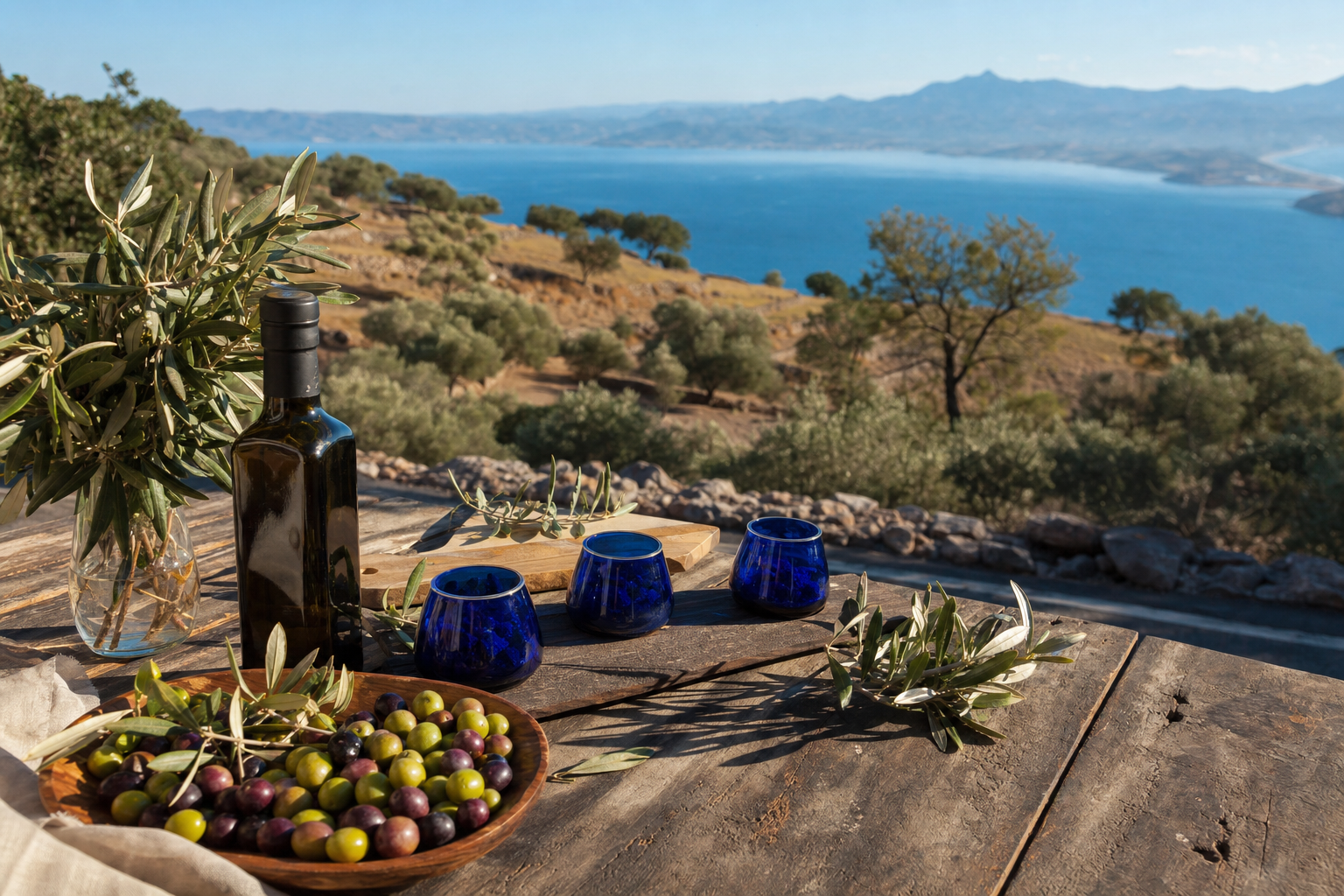
Lesvos Olive Oil Tasting: A Guide to Quality
For a Lesvos olive oil tasting, begin with aroma rather than colour, then assess fruitiness, bitterness and the peppery sensation in your throat. Freshly cut grass, tomato leaf, artichoke, herbs and almond can all be positive notes. Cardboard, stale walnuts, dampness or vinegar may indicate faults. The purpose is not simply to find an oil you enjoy, but to use your senses to judge its freshness and how carefully it was produced.
Lesvos has built much of its food culture around olive oil, supported by extensive groves and production at village and family level. In the port city of Mytilene, oil is part of daily life, from grocery shelves to restaurant meze. Travel inland towards the main growing areas and you can learn more about harvesting, milling, storage and family production. Reading an introduction to Lesvos and its olive growing landscape will help you understand the island before you arrive.
As of 24 September 2026, autumn is approaching and attention is turning towards the new harvest. However, starting dates vary according to olive variety, altitude, rainfall and the flavour profile each producer wants. It is therefore important to read the harvest date, ask useful questions during a tasting and carry your purchases home under suitable conditions.
What Makes Lesvos Olive Oil Culture Special?
The place of olive groves in island life
Olive groves on Lesvos are more than agricultural land. They shape the hills around villages, influence the seasonal working rhythm of local families and define how oil is used in the island's cooking. In areas where trees stand on terraces across rocky slopes, it is easy to see why harvesting can be labour intensive. Machinery has limited access to some plots, so picking methods must be adapted to the terrain.
Local olive varieties and production choices create noticeable differences in aroma and flavour. Geography alone, however, does not guarantee quality. Healthy fruit, a short interval between picking and milling, clean equipment, controlled processing and correct storage all matter. The word Lesvos on a bottle is not automatic proof that the oil is free from faults.
Local production traditions and everyday cooking
Lesvos olive oil culture is perhaps best understood at the dining table. Oil is not used only as a final dressing for salad. It also goes into wild greens, pulses, oven dishes, fish meze and vegetable recipes. When tasted simply with bread at breakfast, its aroma, bitterness and finish become easier to recognise.
At a local restaurant, try the first mouthful before adding lemon, vinegar or strong seasoning. Acidity and assertive flavours can obscure the oil's more delicate qualities. Then taste the same oil with tomato, cheese, boiled vegetables or bread to see how it performs with food. The wider Lesvos island guide can help you combine food stops with a practical sightseeing route.
How Does Harvest Time Affect Olive Oil Flavour?
Early harvest and ripe harvest oils
For an early harvest, olives are picked while they are still relatively green. The yield may be lower, but the resulting oil can show stronger notes of green fruit, leaves, fresh grass, artichoke and tomato stalk. Bitterness and pepperiness in the throat are often more pronounced too. This style tends to appeal to people who enjoy an intense, lively oil.
As olives ripen, the flavour can become softer, rounder and more suggestive of ripe fruit. That does not make ripe harvest oil inferior. Harvest timing is partly a stylistic choice, while quality also depends on fruit condition and production methods. Unpleasant flavours caused by damaged olives, very late picking or delays before milling should not be confused with the natural softness of a ripe harvest.
The autumn and winter production cycle
The olive harvest on Lesvos generally takes place across autumn and winter. Exact dates differ by district, variety, weather and the ripeness level sought by the producer. If you visit at the end of September 2026, do not assume that new season oil will already be available everywhere. Some bottles may come from the previous harvest and can still be in good condition if stored properly.
Contact producers in advance if you want to visit during harvest. Olive mills do not necessarily operate like visitor attractions with fixed public hours. On busy production days, tastings may be unavailable and access to working areas can be restricted for safety. When arranging an appointment, ask about its length, whether oil is sold on site and how to reach the premises.
Freshness and the harvest date
Unlike wine, olive oil is not expected to improve with age. It is intended to be consumed fresh. Instead of checking only the best before date, look for a harvest date or production season. If neither appears, ask the seller, while remembering that a verbal answer is not a substitute for traceable information on the label.
Freshness is not measured by the calendar alone. A young oil exposed to heat, light and oxygen can be in worse condition than an older oil protected in a cool, dark place. Bottles displayed in direct sunlight, loose caps and damaged packaging are all good reasons to reconsider a purchase.
How to Do a Lesvos Olive Oil Tasting
The right tasting glass and temperature
Professional tasters use dark coloured glasses that conceal the oil's appearance. At home or while travelling, a small, clean and odourless glass is sufficient. A clear glass is not a problem, provided that you do not treat colour as a quality score. Perfume, strongly scented hand cream, cigarette smoke and coffee can interfere with your perception, so keep the setting as neutral as possible.
Pour a small amount of oil into the glass. Hold the base in one hand, cover the top with the other and gently rotate it in your palm for a short time. This mild warming releases volatile aromas. Do not place the glass in hot water or near a direct heat source, as overheating can distort the aroma.
Smelling, sipping and drawing in air
- Smell: Uncover the glass and take two or three short sniffs. Note your first impression. Look for fresh grass, leaves and green or ripe fruit.
- Take a small sip: Let the oil spread over your tongue and towards the sides of your mouth. A large mouthful makes detail harder to detect.
- Draw in air: Pull a small, controlled amount of air through your teeth. This helps aromas travel from the back of your mouth towards your nose. There is no need to inhale so sharply that you start coughing.
- Swallow: Observe bitterness on the tongue and pepperiness in the throat. Consider how long the flavour lasts and whether the finish feels clean or heavy.
Naming specific aromas may be difficult at first. Rather than forcing an exact description, record whether the oil seems fresh or stale, green or ripe, mild or intense. Comparing two or three oils in the same session makes their differences much easier to identify.
Cleansing your palate between oils
Drink room temperature water and eat a small piece of plain apple between samples. Salty cheese, olives, garlicky meze and coffee can overpower the next oil. Sensory fatigue may begin after three or four samples. A short pause produces more reliable impressions than rushing through a long row of bottles.
Which Olive Oil Quality Indicators Matter?
Fruitiness and fresh plant aromas
Fruitiness is one of the main positive characteristics of extra virgin olive oil. It does not mean that the oil tastes sweet. The term can include aromas recalling fresh olives, cut grass, tomato leaf, artichoke, green almond, apple or aromatic herbs. Not every oil should display the same notes. Variety, ripeness and production technique all affect its profile.
The aroma should be distinct but clean. Instead of focusing only on the strength of one note, look for consistency between the nose and palate. An oil that smells of green herbs should usually retain some liveliness in the mouth. If the aroma disappears immediately and leaves a dull, greasy sensation, the oil may have lost freshness.
Bitterness and pungency in olive oil
Bitterness and pungency in olive oil are not automatically faults. They can be positive sensory qualities connected with the olive's natural phenolic compounds. Bitterness is often perceived towards the back of the tongue, while a peppery catch appears in the throat after swallowing. Both may be particularly clear in early harvest oils, and a slight urge to cough is not unusual.
Strength alone does not prove quality. A very bitter oil may still contain unpleasant aromas, while a mild oil can be balanced and clean. Fruitiness, bitterness, pungency and the absence of defects should be considered together. Think about how you will use it as well. An intense oil may shine when served raw, while a gentler one can suit particular cooked dishes.
Balance, intensity and persistence
In a balanced oil, no single characteristic overwhelms everything else. Bitterness and pungency support the fruitiness, and the oil does not leave a heavy, waxy or tiring coating in the mouth. Pleasant aromas that continue after swallowing indicate persistence. Yet a long finish is not always positive. Stale walnut or cardboard notes can persist too.
The most useful tasting question is simple: does the oil smell and taste lively, clean and internally consistent? Record what your nose and palate tell you before giving weight to claims on the label.
How Can You Recognise Olive Oil Faults?
Stale and oxidised flavours
Oxidation occurs as olive oil loses freshness through contact with air, light and heat. Aromas of stale nuts, old walnuts, cardboard, wax or oil left open for a long time may suggest oxidation. Fruitiness fades and the palate becomes flat and heavy. This problem is not limited to old bottles. A new oil can oxidise quickly if handled badly.
If tasting is offered before purchase, ask which bottle the sample came from. A tasting bottle that has stood open for a long time may not represent the sealed stock accurately. On the other hand, a clearly stale sample can reveal how seriously the seller takes open bottle management and product protection.
Mould, dampness and fermentation
Smells recalling a damp cellar, mouldy cloth or wet earth may point to fruit stored in unhealthy or unsuitable conditions. Sharp notes of vinegar, wine, fermented fruit or nail polish remover can indicate unwanted fermentation. Do not accept these aromas as rustic authenticity or a natural feature of village oil.
The description traditional production does not remove the need for hygiene and proper storage. Clean, traceable and well protected oil can come from a small family business or a larger producer. Judge the tasting result, clarity of labelling and condition of the package before making assumptions based on production scale.
Why is colour not a quality measure by itself?
Olive oil can range from golden yellow to deep green. Variety, picking time and natural pigments all influence its appearance. A dark green oil is not necessarily early harvest or high quality. A yellow toned oil can be clean, fresh and well balanced.
Professional tasting glasses are coloured precisely to reduce visual bias. Smell and taste the oil before being influenced by what you see through a clear bottle. Do not buy solely because the colour appears unusually vivid. Olive oil quality indicators must combine sensory cleanliness, freshness, balance and reliable product information.
How to Read an Olive Oil Label and Buy Well
Harvest date and best before date
When reading an olive oil label, first check the product category, harvest period, bottling date and best before date. Harvest information tells you more about the oil's age than the best before date alone. A batch or lot number supports traceability. Producer and bottler details should be clear, and the label should not look faded, altered or replaced.
When buying olive oil in Lesvos, do not rely only on souvenir shops. Compare local food shops, producer outlets and cooperatives. If tasting is available, try different harvest styles from the same producer. Price alone is not a measure of quality, although detailed production and harvest information is reassuring.
Extra virgin classification and acidity
The term extra virgin identifies a category governed by chemical and sensory criteria. Free acidity information can be useful, but it does not explain flavour or overall quality by itself. An oil advertised as low acidity may still be oxidised or have another sensory fault. Acidity in this technical sense cannot be measured directly with your tongue.
Consider terms such as award winning, traditional method and cold extraction in context. Ask when the olives were picked, how soon they reached the mill and how the oil was stored. Clear, specific answers are more useful than large marketing claims.
Packaging, storage and bottle size
Dark glass bottles and lightproof tins help protect oil. Clear glass is not inherently bad, but exposure to light increases the risk of deterioration. Check that the cap is secure and leakproof, preferably with a tamper evident ring. Avoid tins that are dented, rusty or leaking.
Choose bottle size according to how quickly you use oil. A large container can appear economical, but oxidation advances as the air space inside increases after opening. Several smaller bottles may be wiser for slow consumption. At home, keep the oil away from the cooker, windows and a hot car boot. A cool, dark cupboard with a reasonably stable temperature is suitable.
Safe packing for the ferry journey
- Check the cap and tamper evident seal when buying the bottle.
- Place each container in a separate leakproof bag.
- Wrap glass in clothing, protective packaging or thick paper.
- Pack bottles in the middle of your bag without wedging them between hard objects.
- Protect tins from crushing and never leave them in direct sunlight inside a vehicle.
- Check current transport, baggage and customs rules before travelling.
Ferry baggage policies and personal import rules can change. Confirm current limits and official requirements before deciding how much to buy. Keep the receipt and product label until your return journey is complete.
Adding a Lesvos Olive Oil Tasting to Your Itinerary
Time management on a day trip
On a day trip, specialist food shops and tasting outlets in central Mytilene may be more practical than a producer far from the port. Passport procedures, the walk into town, lunch and the need to return to the terminal early all reduce your available time. Check the latest Ayvalik to Lesvos ferry departures before requesting a tasting appointment.
A morning tasting usually works well for your senses. Coffee, smoking, strong perfume and spicy meals can distort impressions if consumed immediately beforehand. Complete your purchases after tasting. This prevents you from carrying bottles all day or exposing them unnecessarily to hot weather.
Reaching production areas on an overnight visit
Lesvos is a large island. Trying to fit Molyvos, Plomari, Agiasos and the natural landscapes of the west into one day is rarely efficient. Staying at least one night makes it easier to plan village roads and producer appointments. When deciding how long to allow, consult this guide to how many days you need for Lesvos.
Combine a tasting appointment with another cultural stop in the same part of the island. This avoids driving from one end of Lesvos to the other for a single sample. Reviewing places to visit in Lesvos in geographical groups will save both time and fuel.
Transport with and without a car
A hire car makes rural producers easier to reach, but narrow village roads, parking and your return time must be considered. Olive oil tasting does not involve alcohol, although the driver should still avoid rushing and allow realistic journey times. Confirm licence validity, insurance and contract conditions directly with the hire company.
Without a car, combine walking in central Mytilene with local buses and taxis. If taking a taxi to a rural mill or producer, arrange the return in advance. The principles in this car free Greek islands guide are useful for planning from the ferry port. Do not rely only on a map application's journey estimate when returning. Allow time for traffic and waiting.
Frequently Asked Questions
Is bitterness a sign of quality in olive oil?
Bitterness can be a positive characteristic, especially in oil made from green olives picked early. It is not proof of quality on its own. Fruitiness, pungency, balance and the presence or absence of faults must all be assessed together.
Why does good olive oil catch in the throat?
The peppery sensation is associated with natural phenolic compounds and may be prominent in fresh oil. Its intensity varies with variety, harvest timing and production. Not every strongly pungent oil is good, and a balanced oil with mild pungency may still be high quality.
Does olive oil colour indicate quality?
No. Colour can range from green to yellow according to olive variety, ripeness and pigments. Assess aroma, flavour, faults, harvest information and storage conditions instead.
How should olive oil bought in Lesvos be stored?
Keep it tightly closed in a cool, dark cupboard where the temperature remains fairly stable. Beside the cooker, on a windowsill or on a sunny balcony are unsuitable locations. Choose bottle sizes you can use within a reasonable period after opening.
How should olive oil be carried on the ferry?
Put each bottle in a leakproof bag, wrap it against impact and secure it in the middle of your luggage. Keep glass containers apart and protect tins from crushing. Check current baggage, customs and personal goods rules before departure.
Plan Your Lesvos Olive Oil Tasting
Coordinate ferry and tasting times
Check ferry options for your travel date first, then contact the tasting venue in writing. Leave enough time after arrival for passport procedures and transport into town. On the return journey, reach the terminal comfortably before departure. Passport and visa requirements vary by travel date, nationality and personal circumstances, so check current official requirements before travelling. If relevant to your trip through Turkey, use the 2026 Greek islands visa on arrival guide to review your preparation timeline.
Ask whether the tasting has a fee, how many oils are included, whether explanations are available in English and if card payment is accepted. Knowing these details beforehand prevents a short visit being consumed by arrangements at the counter. Keep an alternative shop on your list if you plan to visit without an appointment.
A short checklist before buying
- Does the oil smell clean and lively?
- Are fruitiness, bitterness and pungency balanced?
- Can you detect cardboard, stale walnut, mould, vinegar or dampness?
- Does the label show the harvest period, product category and lot number?
- Does the packaging provide adequate protection from light, leakage and impact?
- Is the bottle size suitable for your rate of use at home?
- Do you have a leakproof bag and protective wrapping for transport?
Once your checklist is complete, bring the tasting and travel arrangements into the same plan. Compare current sailings, fares and ticket conditions, then book your Ayvalik to Lesvos ferry ticket through Meander Feribot and begin your olive oil route from the harbour.